








Curtis TanOps analyst · Builder
  1. Home
  2. Work

Things I build after hours.

Five products, a governance framework, a trading research system, and the skill collection that ties them together.

How these get built

I'm not a software engineer by training. I write the brief, make the product and control decisions, and approve every change. AI agents, mostly Claude and sometimes Codex, write the code.

REF FPS-02Deployed

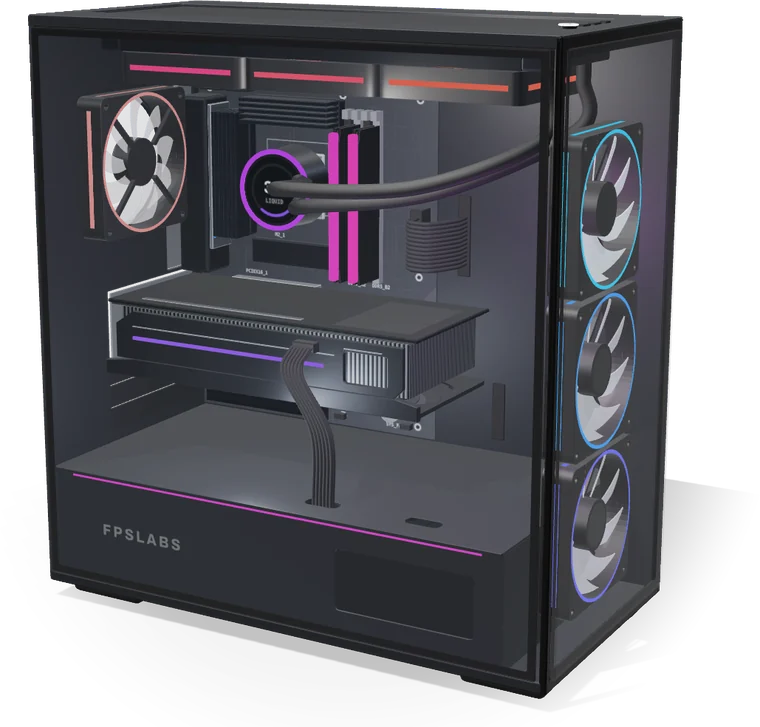
FPSLabs

Gaming PC business

Pre-built and custom gaming PCs, each tested and tuned, with a one-year warranty. I designed the site, the build configurator, the back office and the performance indexes that rate every build.

  • Cloudflare Workers
  • Supabase
  • Excel tracker
Business · site · back officeRead
REF BRW-03Public playtest

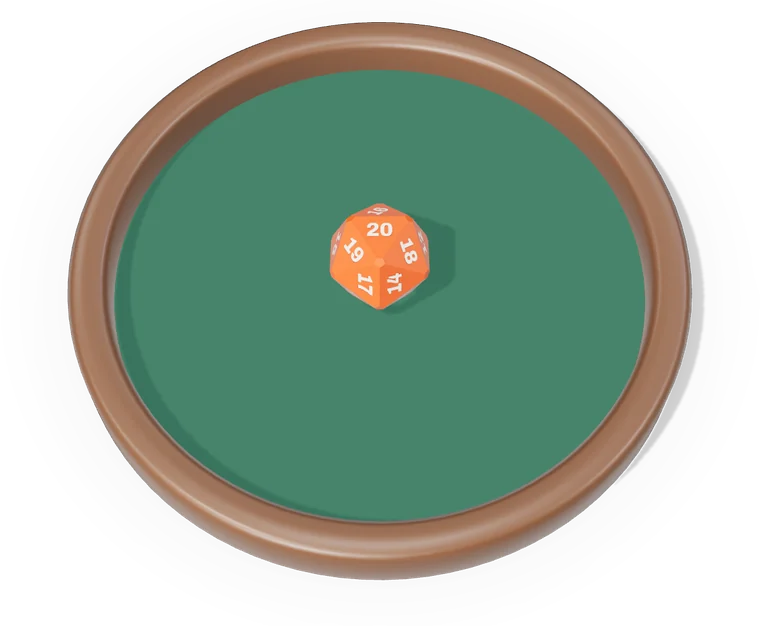
Briarwatch

AI game master, honest dice

A single-player d20 adventure where Claude narrates, improvises and writes new story arcs, while a rules engine decides every number. The one project here with public code.

  • Node.js
  • Claude API
  • Offline mode
v4.1.0-alpha.3Read
REF MIC-04Local pilot

mic&more

Live shows and tickets, Singapore

A guide to live music, comedy, theatre, dance and spoken word, with ticket releases, PayNow checkout, QR admission and workspaces for organisers, venues and artists.

  • Python
  • PayNow
  • WebGL
Guide · ticketing · workspacesRead
REF RNS-05Working trial

RenoStack

Renovations after the contract

One record for a Singapore renovation: five stages, formal decisions and approvals, variations, payment records, defects, handover and aftercare, for homeowners and their designers.

  • Passkeys
  • Web and mobile
  • Node.js
14 trial logins · 4 projectsRead
REF PNG-06Foundation build

PingOwl

Monitoring, run by AI agents

Uptime, SSL, domain and cron monitoring with three-region voting, designed to be built and operated by AI agents under a governance gate they can't fake.

  • TypeScript
  • Postgres
  • Cloudflare
Three regions · signed resultsRead
REF SKL-07In daily use

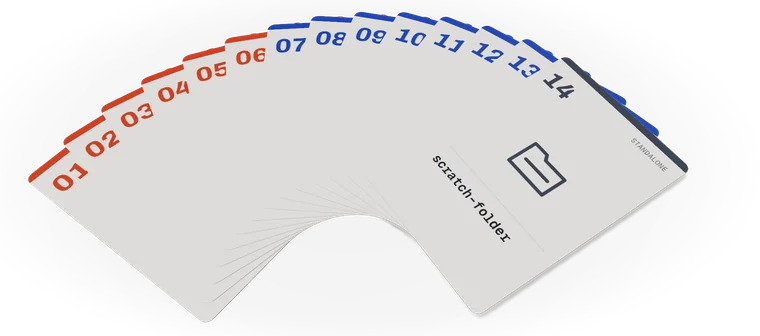
AI skills

The rulebook behind all of it

Fourteen instruction files that give AI agents an operations desk's habits, each one explained, with the evaluation results for the seven-skill pack.

  • Claude skills
  • Evals
14 skills · 3 setsRead

+ Also in the workshop

REF GPFWhere it started

Governance framework

Where Initialize, Validate and Approve began: a three-command framework for directing AI coding agents, backed by 294 tests. Its rules now live on in the skills and in every project above.

Read the write-up: governance frameworkHide the write-up: governance framework

What it is

My first governance and records repository, built when I started directing AI coding agents. It holds the three-command framework, a short rulebook of eleven rules that every agent works under, validators, a file-change scope checker, a catalogue builder for portable skills, dated status checkpoints and an archive of evidence. About 4,200 lines of Python and C carry 294 tests.

Why it exists

I don't write the code; I direct the agents that do. That only works if an agent stays inside the task I approved, shows what it actually did, and leaves the decisions to me. In operations nothing settles without a check and a sign-off, and I wanted the same before letting agents near anything that mattered.

How it works

  • Three commands. Initialize prepares a bounded task, Validate checks the real result and fixes problems within scope, and Approve records my decision and does only what I approved. Ordinary requests skip the ritual.
  • Separate approvals. Approving a task, approving its pull request, marking it ready and merging are separate steps, unless I name them together.
  • Careful merges. Merge only with my explicit OK, at the exact commit I approved, with checks green, then confirm the result. Never force-push, bypass a rule or blindly retry.
  • No self-certification. A green check or a reviewer's pass is not my approval, a report never claims tests that weren't run, and an approval for one repository or task doesn't carry over to another.

The thinking

A whole-repository review in October 2026 found the code careful and every recorded hash matching its file. It also found about thirteen words of governance prose for every line of code, and frozen status fields that had drifted from reality. The cost of governance turned out to be weight and drift, not bugs, so the rules moved into small skills that load only when a task needs them.

Where it stands

Kept as the reference the skills came from, with its tooling and records as history and evidence. The repository is private.

REF QNTNo real money yet

QuantSystem

A paper-first ETF trading research system in six phases, each with exit criteria. Agents never touch money, there's a kill switch, and live trading waits until at least April 2027.

Read the write-up: QuantSystemHide the write-up: QuantSystem

What it is

A small, rules-based ETF portfolio system meant to run unattended once it has earned that. A deterministic Python bot does the trading: after each close it fetches the day's prices, computes targets, runs risk checks, places orders and reconciles with the broker. AI agents build it, watch it and review it, but they have no route to the account.

Why it exists

I wanted to know whether a small portfolio can be run with the controls of a real trading operation (honest backtests, reconciliation, hard risk limits, a kill switch) and to find out by measurement rather than hope. At its starting size even a good edge is worth very little, so the real product is discipline: a machine that is trustworthy before any meaningful money depends on it.

How it works

  • Six phases, each with exit criteria. Clear a free data source, store real data safely, run a first honest backtest, paper trade unattended for at least eight weeks, run a tiny live canary for three months, then scale up in approved steps. A phase is done when its exit criteria are met, not when its code is written.
  • Honest backtests. Signals use completed closes and fill at the next session's open in whole shares, with commission and slippage charged. Costs are stressed up to three times, results are reported for three separate periods, and the pass marks are written down before any result exists. Every result is kept, good or bad.
  • Paper before money. Pre-trade checks run as code: whitelist, settled cash, position caps, stale data, duplicate orders and the kill switch. Every run starts and ends with a reconciliation, and deliberately injected failures must end with no trade.
  • Agents kept away from the money. Agents get no shell on the server and no broker credentials; their only way to change anything is a pull request. The one thing an agent can do to the account is raise a halt flag that cancels and blocks orders. On its own, the system may only ever reduce risk.

The thinking

"Learning" here means better decisions and risk control, not chasing returns. Real costs and slippage feed back into the backtest. Trend filters and volatility-scaled sizes adapt mechanically, with nothing refitted live. A strategy that drifts outside its backtest envelope is cut back or halted automatically. New ideas go through a quarterly research loop, one or two at a time, each logged even when it fails, so every extra trial raises the bar. Machine learning that predicts returns is out for now: daily ETF data covers too few market regimes and would only be overfitted. An LLM is useful as a research assistant and reviewer, not as a trader.

Where it stands

The first backtest has run. Its one real candidate, a 200-day trend rule meant to make falls shallower, was judged against pass marks fixed before any result existed and was rejected, so it never reached paper trading. The plain buy-and-hold control goes to paper instead. Live trading waits until at least April 2027, and every step up in size needs my yes. The repository is private.